Saturday, February 14, 2015

Basic Tools to Keep Aboard


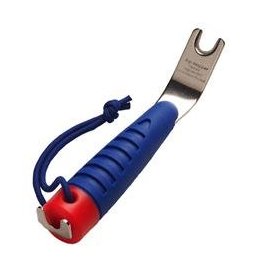
Canvas Snap ToolIt’s always best to be prepared when traveling on your boat. Carrying a first aid kit is a must, but carrying a tool kit with you is also a good decision. You never know when you might need to repair a canvas or tighten a bolt. First, make sure you have a waterproof marine tool box to keep your tools organized and handy, but also to protect your tools from water damage.

Now, what’s in your toolkit? Here are a few basic tools you should keep in your tool kit onboard at all times.

Canvas Snap Tool: Easily align and fasten inside and outside snaps. Ideal for unsnapping snaps without damaging the canvas. (pictured)

Duct Tape: Because everyone knows that Duct Tape can fix anything! Electrical tape is another good thing to keep handy.

Manuals: Chances are, if you need your toolkit, you’ll also need your manual – whether for your engine, plumbing, ventilation, or just your boat in general. You should keep these manuals in your tool box with your tools so that you don’t have to search for them when you truly need them. Make sure you keep these in a large plastic zip lock bag so that they don’t get wet.

Wrenches: Make sure you have several different sizes with you if you aren’t quite sure of the exact sizes that you’ll need.

Screwdrivers: Pick up one of those handy dandy 11-in-1 screwdriver sets at your local hardware store – you’ll thank yourself later.

Canvas Repair Kit: This kit should include small pieces of canvas, needles and string.

Super Glue: Because just like Duct Tape, it can fix anything when you’re in a pickle.

Multi-tool: Having a small multi-functional tool on board, such as Swiss army knife, can definitely come in handy. Many of these tools include small screwdrivers, scissors, knives of all sizes, etc.

Socket Set: If you have the room for a complete set, perfect. If not, find out the sizes you need and keep them on board at all times.

Spare Flashlight: with fresh batteries. Make sure your flashlight is waterproof and floats in case of an emergency.

There are several other things to consider keeping on board in your tool box (depending on the size of your boat and add-on equipment) such as extra fuses, impellers, spare keys, wire cutters, spare electrical wiring, etc.

Make sure you keep your tool kit in a place where you can easily access it, especially in a time of emergency. If you have to use something in your toolkit (such as a spare part) or if something in your toolkit breaks, be sure to replace it as soon as you get back to dock. It wouldn’t be much fun if you were stranded in the middle of nowhere with a broken wrench. Be prepared, carry a tool kit, and happy boating!

Monday, January 26, 2015

3 Tips To Make Backing Up Easy


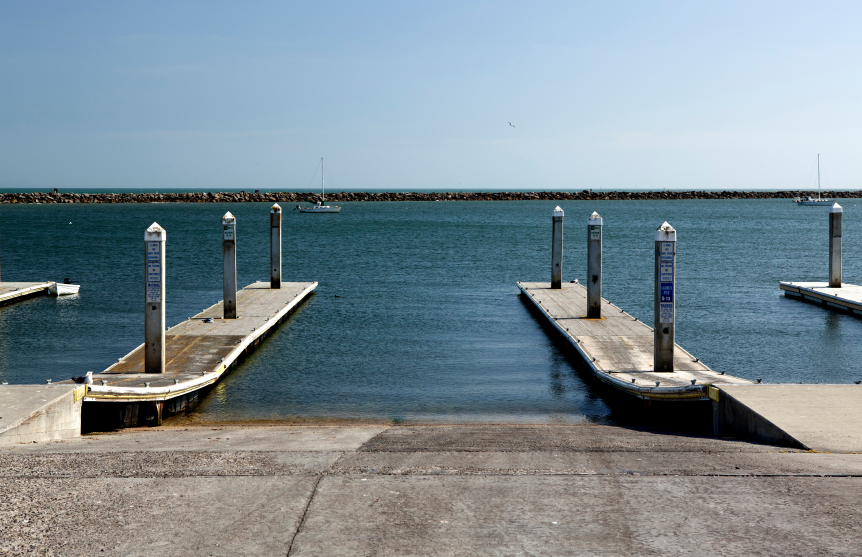
Boat RampYou can feel the sweatdrop forming at the tip of your nose as you crank the wheel about to make another stab at getting your trailer down the boat ramp. It may be your imagination, but is it possible that it somehow got 20° hotter since you began this ordeal? What is not your imagination is the increasing number of eyes that are watching your lack of progress as the trailer inexplicably begins to jackknife on itself once again. You hit the brakes and begin to crank the wheel to the accompaniment of groans from the studio audience.

Is this your typical experience when you’re attempting to trailer boats? If this is indeed your typical result, then relax because we have three tips that are guaranteed to have you moving your trailer down that boat ramp like a pro!

Position and Preparation: The Key To Success

As with everything in life, if you prepare properly for your maneuver you will be well positioned to get that trailer boat to the edge of the water in Bristol condition. Towards that end you want to assure that your trailer is directly behind your vehicle. You will need to use your side mirrors to ensure that this is in fact the case. With a proper side mirror adjustment, the side of your tow vehicle and your trailer should appear in the inside third of your mirrors. Ideally, you will also be able to see your trailer tires in your mirrors, which will give you a solid sense for what direction your trailer is heading in.

Real Boaters Don’t Look Back

At this stage of the game, most trailer neophytes will throw their arm over the seat and crane their necks to see what’s going on out the back window. This is a mistake. As mentioned, the side mirrors are the keys to success in this endeavor, and spinning your head around like you are auditioning for The Exorcist is not the best way to utilize these mirrors. As such, once your boat is lined up directly behind you, eschew the temptation to use your rearview mirror or the gymnastics required to see out your back window and over the boat sitting on the trailer blocking your vision.

Real Boaters Practice

As with anything on a boat, practice makes perfect. Just as it took some time to learn how to raise the main sheet on your sailboat, and even more time to figure out how to tie a bowline, so too will your success on the boat ramp be predicated on practicing a lot before you get there. Getting sport boats down the ramp and into the water shouldn’t be the sport. The sport should be having fun on the water once the boat is off the trailer and ready to go. Positioning yourself properly, correctly using your mirrors, and practice will guarantee that the start of your day on the water will be awesome!

Saturday, January 24, 2015

Untitled


Come by Lakeshore Sports for some fun on the water. Our Ride and Drive is today and it is perfect weather for boat shopping. We have some beautiful Cobalts boats and Premier Pontoons in the water ready and waiting. Come hungry we have lots of food also.


Ride and Drive4.jpg

Ride and Drive3.jpg

Tuesday, January 13, 2015

Boat Safety Equipment To Always Keep Onboard

There's nothing like a day on the lake with your boat. It only takes one experience of the boating lifestyle, and you are hooked. But from a first-time boater to a seasoned pro, there's one aspect of boating that can never receive enough attention - safety. There are a few things you should always keep on board your boat to make sure you get the most out of your boat.

Life Jackets

A life jacket is probably the most crucial piece of boating safety equipment, but one that people neglect the most. When people are out on a boat, they want to enjoy the sun and spray - so many go without a life jacket. When most people think of a life jacket, the big, bulky orange block comes to mind. Today's life jackets are a lot more comfortable than most people would think, though. They're available in slim, flexible styles that don't really inhibit movement. Even if you have them stowed somewhere in the boat, accidents often happen at a very quick speed, and there's not time to react and reached a stowed vest. So keeping your vest on is key. A report from the United States Coast Guard says that simply having a life jacket would have saved over 80 % of boating deaths.

A First Aid Kit

Minor accidents can and almost certainly will happen on your boat - as with any other recreational activity. And when they do, you want to be prepared. You may be some distance away from medical help, so keeping a first aid kit onboard can make sure everyone stays safe. Also, a minor accident could become more serious if you don't have proper care onboard. Keeping a kit handy can make sure you're able to have a fun and safe day on the water.

Drinking Water

Sure, there's plenty of water around. But can you use it? Keeping a supply of drinking water onboard can keep everyone safe in the event you have mechanical trouble a long way from shore. Since most boating is occurs during warm and sunny weather, it's best just to have water around to keep everyone cool. People can get dehydrated a lot more quickly than they think while boating. You have direct sunshine, a possible breeze and fun activities that uses energy. Keeping drinking water onboard ensures everyone's safety and health.

What safety equipment do you alway keep onboard?

Tips For Navigating A Boat At Night

Taking your boat out after dark can be romantic, relaxing and picturesque. Those pre-dawn hours can also be when some of the best fishing takes place. However, boat navigation at night presents some additional risks not encountered during the daytime. To keep safe on the water at night, be sure to follow these five boating safety tips:

1. Check your navigation lights before you leave. Your boat's green and red navigation lights help other watercraft be able to place you and your course at night on the water. They are required by Coast Guard regulations to be visible at least a mile away. Make sure your lights are burning brightly and aren't obstructed by fishing gear and other equipment before  you leave the dock.

2. Look, listen and scan. Good navigation--at night and during the day--requires you to be alert and ever vigilant to the condition of the water, the other craft around you, navigational markers and the changing weather conditions. It's also wise to listen for the sounds of other craft. Some, smaller boats are not required to have navigation lights. Others may have lights that have malfunctioned.

3. Trust your instruments. It's easy to get disoriented out on the water at night. Rely on your instrument readings. Your eyes can play trick on you, especially in the darkness, whereas, your instruments are rarely, if ever, wrong. If your boat is equipped with a GPS device, it's a good idea to rely on its output. If this data conflicts with your visual indications, stop your boat until you can reconcile the two.

4. Avoid using your spotlight. Spotlights are designed for boat captains to see objects far in the distance. Used constantly, they can blind other boaters and can be very dangerous. Plus, the reflection from the water caused by the spotlight can hamper your own sense of space and distance. Use your spotlight sparingly, if at all.

5. Don't rush. One of the most important safety tips for navigating a boat at night is to slow it down. Although it's tempting to want to get home as soon as possible, reduced visibility at night makes it a good idea to take it down a notch.

This season when you go out on the water at night, be sure to practice good boating safety, not only for you and your passengers, but for the others out on the water.

Five Nautical Terms You Probably Have Not Heard Before

Whether you're a first-time boater or a seasoned Captain, knowing your nautical terms can be helpful and fun sharing your knowledge with your family and friends while spending the day on the water. But today we're going outside the norm by sharing five nautical terms you've probably never heard before.

Baggy wrinkle – Baggy wrinkle are short lengths of yarn which are attached to a marline
with the use of a knot. The baggy wrinkle is basically frayed out as a protective gear to
prevent the sails from chafing.

Cats Paws – Believe it or not, Cat’s Paws is a pattern of the wind. This pattern is created
by light wind on the surface of water and it resembles the paws of a cat. Purrr!!!!

Down bound – This term is used in the nautical world when a ship is headed in the
down bound lane between the ports on the lake. This terminology is used basically to
avoid collision. So if a vessel is down bound, it simply means that it is out of the Great
Lakes and headed towards the Atlantic Ocean.

Fluke – Surely you are well aware of a ship’s anchor. Fluke can be designated to any of
the triangular blades at the far end of the anchor which is crafted to hold the ground,
and yes, we mean that literally!!!

Quayside – Quayside is basically a wharf or a bank which is created to load and unload
ships. A wharf is basically an open construction for handling cargos.

Bonus Term

Parley – (If you've seen The Pirates of The Caribbean you already know what it means) Parley is a pirate term which is used as a self defense mechanism when one needs a chance to talk to the captain without being harmed.

What's the craziest nautical related word you've ever heard?